Curricular framework for school education will therefore be guided by a 5+3+3+4 design, consisting of the Foundational Stage (in two parts, that is, 3 years of Anganwadi/pre-school + 2 years in primary school in Grades 1-2; both together covering ages 3-8), Preparatory Stage (Grades 3-5, covering ages 8-11), Middle Stage (Grades 6-8, covering ages 11-14), and Secondary Stage (Grades 9-12 in two phases, i.e., 9 and 10 in the first and 11 and 12 in the second, covering ages 14-18).


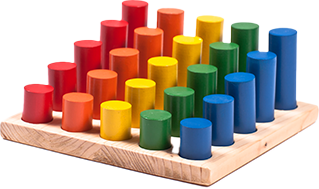
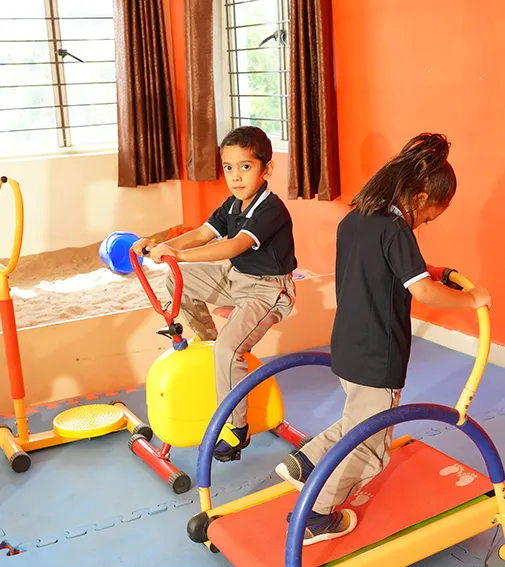
The Foundation Stage ideally consists of flexible, activity-based, and inquiry-based learning, comprising of alphabets, languages, numbers, counting, colours, shapes, indoor and outdoor play, puzzles and logical thinking, problem-solving, drawing, painting and other visual art, craft, drama and puppetry, music and movement. It also focuses on developing social capacities, sensitivity, good behaviour, courtesy, ethics, personal and public cleanliness, teamwork, and cooperation. The overall aim of ECCE will be to attain optimal outcomes in the domains of: physical and motor development, cognitive development, socio-emotional-ethical development, cultural/artistic development, and the development of communication and early language, literacy, and numeracy.
The Foundational Stage will consist of five years of flexible, multilevel, play/activity-based learning and the curriculum and pedagogy of ECCE.
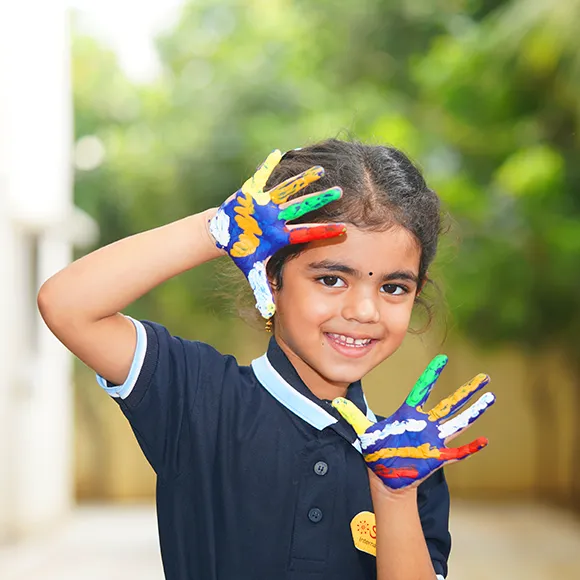
The Preparatory Stage will span three years, serving as a crucial transition from the Foundational Stage while maintaining an engaging and developmentally appropriate learning environment. It will continue to build upon the play-based, discovery-driven, and activity-oriented pedagogy introduced earlier, ensuring a seamless and enjoyable progression in early education.
During this stage, students will gradually be introduced to structured learning, incorporating light textbooks and elements of formal yet interactive classroom instruction. This approach will help develop foundational academic skills while nurturing curiosity, creativity, and critical thinking. Subjects such as reading, writing, speaking, physical education, art, languages, science, and mathematics will be integrated into the curriculum in a balanced and engaging manner, ensuring holistic development. By blending structured academic learning with experiential and hands-on activities, the Preparatory Stage lays a strong educational foundation, equipping students with essential skills and knowledge for their future learning journey.


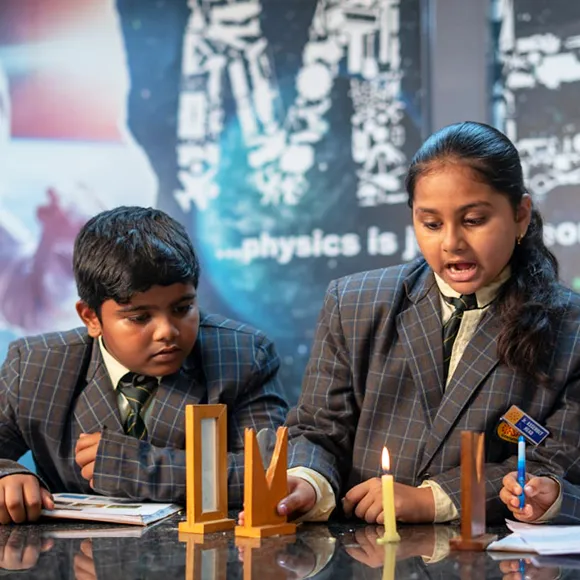
The Middle Stage will span three years, continuing the pedagogical and curricular approach of the Preparatory Stage while introducing subject-specific teachers to guide students through more complex and abstract concepts. This stage marks a shift towards deeper academic engagement, preparing students for advanced learning in sciences, mathematics, arts, social sciences, and humanities. With increased subject specialization, students will develop critical thinking and analytical skills, allowing them to grasp broader academic perspectives.
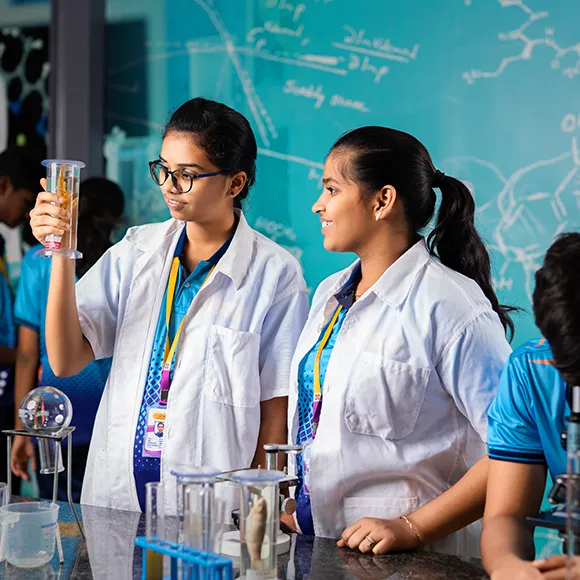
Despite this structured approach, the Middle Stage will emphasize experiential learning, encouraging students to explore connections between different subjects and apply knowledge in real-world contexts. Inquiry-based discussions, hands-on projects, and interdisciplinary learning will play a crucial role in making education engaging, ensuring that students not only learn concepts but also understand their practical applications and interrelations.
The Secondary Stage spans four years of multidisciplinary learning, deepening subject knowledge while fostering critical thinking, analytical skills, and career exploration. Building on the subject-oriented pedagogy of the Middle Stage, this phase offers greater flexibility and student choice, allowing learners to tailor their education based on their interests and aspirations. With a strong focus on life skills, interdisciplinary connections, and independent learning, students are equipped to navigate higher education and future career opportunities with confidence.
A key feature of this stage is the option to exit after Grade 10 and re-enter later to pursue vocational training or specialized courses in Grades 11-12. This allows students to explore different learning pathways, including skill-based programs or enrollment in specialized institutions that cater to their chosen fields, ensuring an adaptable and student-centric approach to education.


Sports integration is another cross-curricular pedagogical approach that utilizes physical activities including indigenous sports, in pedagogical practices to help in developing skills such as collaboration, self-initiative, self-direction, self-discipline, teamwork, responsibility, citizenship, etc. Sports-integrated learning will be undertaken in classroom transactions to help students adopt fitness as a lifelong attitude and to achieve the related life skills along with the levels of fitness as envisaged in the Fit India Movement.
Exit 12 Sports,
Turkayamjal Rd, opp. RTA Office,
Manneguda, Telangana 501510